
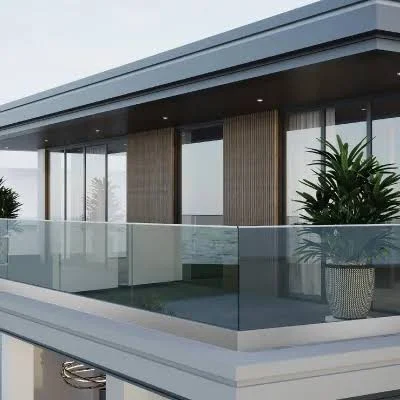
Quick answer: For balconies and terraces in Goa, use laminated toughened glass so the panel stays in place if it breaks, with SS 316 fittings near the sea or SS 304 inland and indoors. Aluminium railings are a lighter, cost-effective option. Choose the fixing system to suit the slab or staircase.
Glass railings open up views from balconies, terraces and staircases. In Goa’s climate the choice of glass and metal decides how safe the railing is and how well it lasts.
Which glass is used for railings?
| Glass | Behaviour if broken | Use |
|---|---|---|
| Toughened | Shatters into small blunt pieces | Interior and low-risk locations |
| Laminated | Cracks but held together by the interlayer | Where glass must stay in place |
| Laminated toughened | Strong and held in place | Balconies, terraces and upper floors |
SS 304 or SS 316?
Both are stainless steels. SS 316 contains molybdenum, which gives it better resistance to chlorides in sea air and pool water. Use SS 316 for beach-side homes, pool decks and exposed terraces; SS 304 is fine for interiors and inland homes.
What fixing options are there?
- Spigot (standoff) fixing – glass held by posts at the base; light and minimal.
- Channel fixing – glass set in a continuous base channel for a frameless look.
- Point or side fixing – glass fixed to the slab edge, leaving the floor clear.
- Post and handrail – SS or aluminium posts with a top rail and glass infill.
How should I look after glass railings near the sea?
Rinse steel fittings with fresh water and wipe glass regularly; salt deposits are easier to remove when fresh.
See our glass, SS and aluminium railings in Goa and glass works.
What should I check before installing a glass railing on a balcony or staircase?
Glass railings look simple, but safety depends on the details. Check these points before work starts.
- Slab edge and fixing zone: base channels and spigots need sound concrete; hollow or damaged slab edges must be repaired first.
- Floor finish level: agree the final tile or stone level before fixing, so the railing height is measured from the finished floor.
- Height and gaps: railing height and the gaps below and between panels should suit the drop and the people using the space, including children.
- Glass type: laminated toughened glass stays in place if a pane breaks, which matters on upper floors.
- Handrail: a top rail adds support on stairs and protects the glass edge.
- Metal grade: near the beach or a pool, specify SS 316 fittings; SS 304 suits inland and indoor use.
- Drainage: balconies should drain freely so water does not sit in base channels.
The Bureau of Indian Standards publishes standards for glass and building safety that architects and engineers refer to. We check the slab, finishes and exposure at the site visit and recommend glass, fixing and metal grade for each location.
Key takeaways
- Laminated toughened glass for balconies.
- SS 316 near the sea and pools.
- Pick the fixing system to suit the slab.
- Rinse fittings regularly.
Planning a glass or steel railing?
Share your opening sizes or a few photos and we will reply with options and an estimate. Free site visit anywhere in Goa.
Sources and further reading
Background reading on the materials and conditions discussed above. Standards and product details change, so check the latest version and ask us what applies to your site.
- Tempered (toughened) glass – Wikipedia
- Laminated glass – Wikipedia
- SAE 316L stainless steel – Wikipedia
- Bureau of Indian Standards (BIS)
Frequently asked questions
Is SS 304 good enough for railings in Goa?
Indoors and inland, yes. Near the beach or around pools, SS 316 resists corrosion much better.
Are glass railings safe for homes with children?
When designed with laminated toughened glass, the right height and secure fixings, they are a safe option. We advise on site.
Do glass railings need a top handrail?
It depends on the design and location; a handrail adds support and protects the glass edge, especially on stairs.