
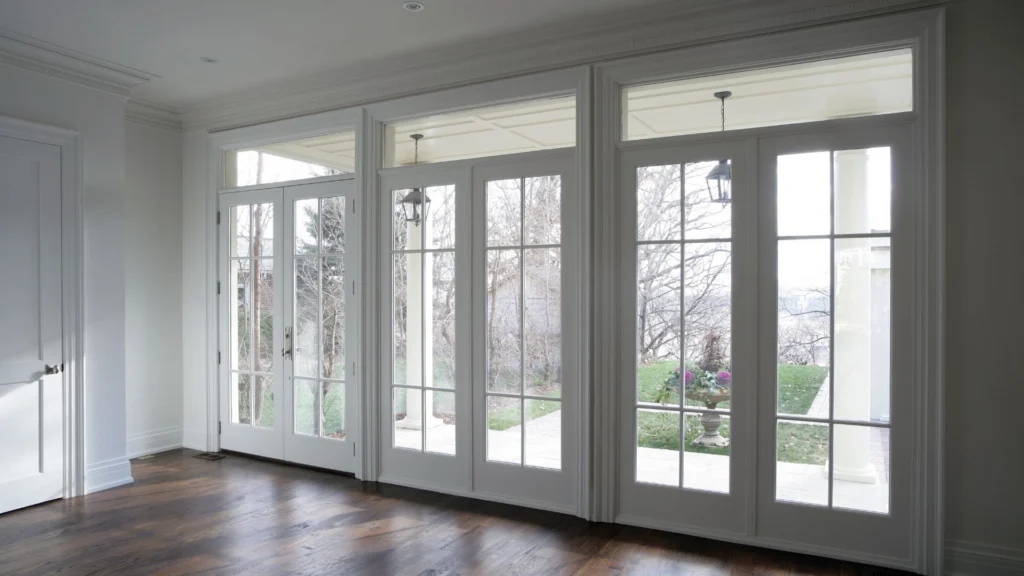
Quick answer: To cut noise, the window must be airtight first: a well-sealed uPVC casement or tilt & turn window with laminated glass or a double-glazed unit blocks far more sound than an old sliding window. Seal the gap between frame and wall too, because sound leaks through any opening.
Homes near the highway, near Dabolim or Mopa airports, on busy market roads or close to tourist nightlife in Goa often struggle with noise. Windows are usually the weakest point.
What makes a window block noise?
- Airtightness – sound travels wherever air does. Gaskets, multi-point locks and a sealed wall joint matter most.
- Glass – laminated glass damps vibration; double-glazed units add an insulating gap; using two panes of different thickness helps further.
- Window type – casement and tilt & turn windows press onto their seals; sliding windows have more air paths.
- Frame – multi-chamber uPVC profiles insulate well.
| Option | Noise reduction | Notes |
|---|---|---|
| Old sliding window, single glass | Low | Gaps in tracks let sound through |
| New sliding window, good seals | Moderate | Fine for quieter streets |
| Casement / tilt & turn, laminated glass | High | Good for bedrooms facing roads |
| Casement / tilt & turn, acoustic DGU | Highest | Best near highways and airports |
Will soundproof windows make a room completely silent?
No window makes a room silent, but a well-sealed window with the right glass can make a big, noticeable difference – especially for traffic and voices. Low-frequency noise such as heavy trucks or bass music is the hardest to block.
See our guide to window glass types and uPVC windows in Goa.
How do I check how much a new window will cut noise?
Noise reduction is hard to judge from a brochure. A few simple checks give a realistic idea before and after installation.
- Find the noise source: traffic, an airport flight path, a construction site or music each have different frequencies; low rumbling noise is the hardest to block.
- Find the weak point: close the existing window and listen at the frame edges, the glass and the wall joint. Air gaps let in the most sound.
- Compare like with like: ask suppliers which glass build-up (laminated or double-glazed) and which window type (casement or sliding) they are quoting.
- Seal the wall joint: a gap between frame and wall can undo much of the benefit, so check how the installer will seal it.
- Test after installation: with all windows closed, compare how loud the same noise sounds before and after; a phone sound-meter app gives a rough comparison.
Remember that sound also travels through doors, AC openings, exhaust fans and ventilators. For bedrooms facing a highway or airport approach, we usually recommend a sealed casement or tilt & turn window with laminated or acoustic double glazing, and we check the other openings in the room at the site visit.
Key takeaways
- Airtight seals come first.
- Laminated glass or DGU reduce noise.
- Casement and tilt & turn beat sliding for noise.
- Seal the wall joint too.
Living near a noisy road or airport?
Share your opening sizes or a few photos and we will reply with options and an estimate. Free site visit anywhere in Goa.
Sources and further reading
Background reading on the materials and conditions discussed above. Standards and product details change, so check the latest version and ask us what applies to your site.
- Soundproofing – Wikipedia
- Insulated glazing (double-glazed units) – Wikipedia
- Laminated glass – Wikipedia
- EPDM rubber (window and door seals) – Wikipedia
Frequently asked questions
Do uPVC windows reduce noise?
Yes. Multi-chamber uPVC frames with good gaskets and laminated or double glass reduce outside noise noticeably.
Is double glazing or laminated glass better for noise?
Both help; for the most reduction use an acoustic double-glazed unit that includes a laminated pane.
Can I keep my existing frame and just change the glass?
Sometimes, if the frame is sound and deep enough for thicker glass, but air gaps in old frames often limit the improvement.