
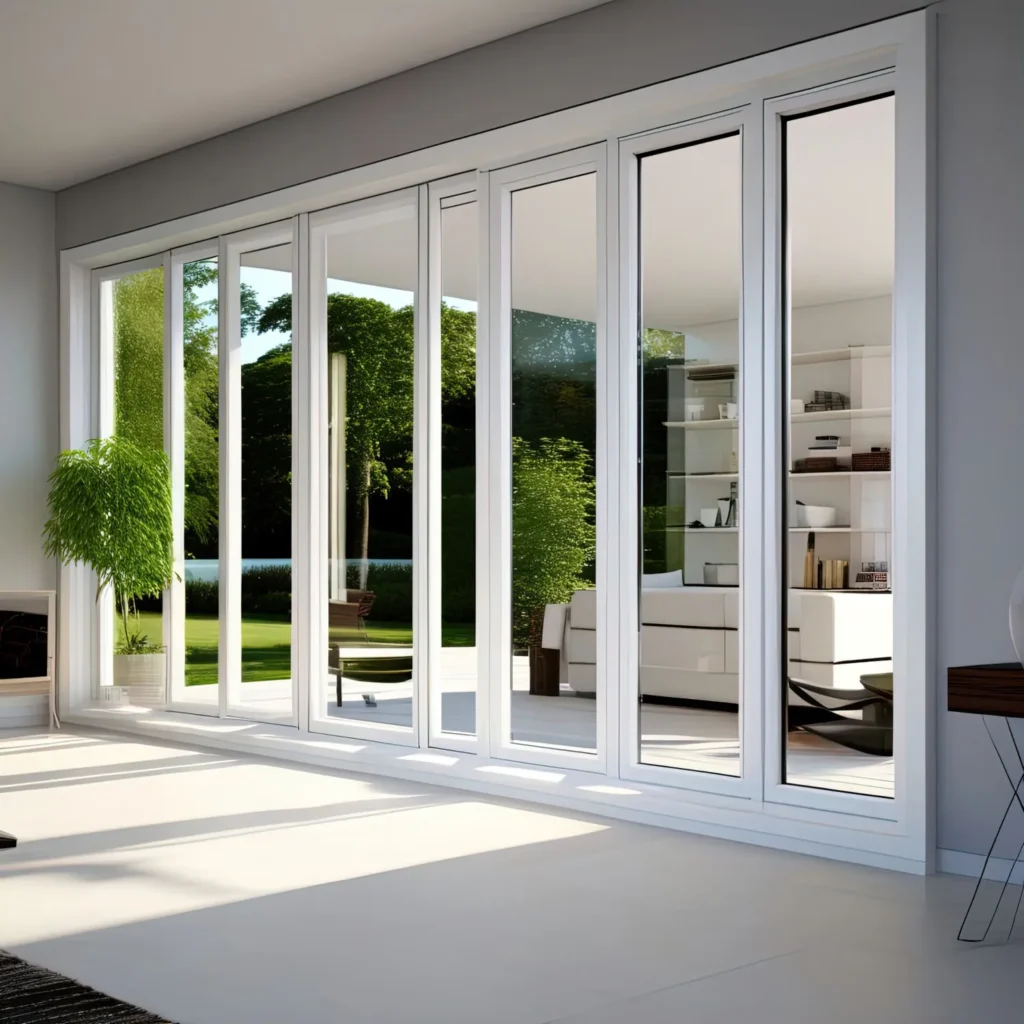
Quick answer: For homes near the sea in Goa, choose uPVC or well powder-coated aluminium frames, stainless-steel (ideally SS 316) hardware and screws, laminated or toughened glass for large doors, and a design that drains wind-driven rain. Rinse frames with fresh water a few times a year.
Homes and villas in Calangute, Candolim, Baga, Anjuna, Morjim, Colva, Benaulim and other beach villages face salt-laden air, strong sun and the full force of monsoon winds. Ordinary steel hardware rusts within a season and timber weathers quickly.
Which frame material is best near the sea?
- uPVC doesn’t corrode, so it is the lowest-maintenance choice for sea-facing windows.
- Aluminium suits large sliding and slide & fold doors onto pools and gardens, provided it has a good-quality, properly pre-treated powder coating.
- Mild steel and timber need the most upkeep near the coast.
Why does hardware matter so much?
Handles, hinges, rollers, locks and screws are usually what fail first near the sea. Ask for stainless-steel hardware – SS 316 contains molybdenum, which resists salt corrosion better than SS 304.
Glass and wind
Large sea-facing doors take strong wind loads in the monsoon. Use toughened or laminated glass, sturdy sections and multi-point locks, and plan thresholds and drainage so rain doesn’t blow in.
How should I care for windows near the beach?
- Rinse frames, tracks and hardware with fresh water every few months.
- Keep sliding tracks free of sand.
- Lightly lubricate locks and hinges with a non-greasy spray.
Read more in our guides to uPVC vs aluminium and powder coating for coastal durability, or see our SS 316 and glass railings.
How should doors and windows be installed in a beach house to resist salt and wind?
Near the sea, installation matters as much as the window itself. A good frame installed badly will still leak or corrode at the fixings.
- Stainless-steel fixings: screws and anchors that fix the frame to the wall should be stainless steel, not plated mild steel that rusts inside the wall.
- Sealant joint: the gap between frame and wall is sealed inside and out; the outside sealant takes the most sun and salt and should be checked every year.
- Drainage outward: sills and thresholds should slope away from the house, and drain slots must stay clear of sand.
- Wind-facing openings: large sea-facing doors need sturdier sections, multi-point locks and safety glass to handle strong monsoon gusts.
- Isolate different metals: where aluminium meets steel or other metals, isolating pads help prevent galvanic corrosion.
- Rinse routine: plan an easy way to rinse frames and hardware with fresh water every few months.
Grade 316 stainless steel contains molybdenum, which gives it better resistance to chlorides in sea air than grade 304. We install with our own team, so the same people who fabricate the frames are responsible for fixing and sealing them on site.
Key takeaways
- uPVC or well-coated aluminium frames.
- SS 316 hardware near the sea.
- Safety glass and strong locks for big doors.
- Rinse with fresh water a few times a year.
Building or renovating near the beach?
Share your opening sizes or a few photos and we will reply with options and an estimate. Free site visit anywhere in Goa.
Sources and further reading
Background reading on the materials and conditions discussed above. Standards and product details change, so check the latest version and ask us what applies to your site.
- SAE 316L stainless steel – Wikipedia
- Nickel Institute – stainless steel technical guidance
- Monsoon of South Asia – Wikipedia
- India Meteorological Department (IMD)
Frequently asked questions
Is aluminium OK near the sea in Goa?
Yes, with a good-quality powder coating applied over proper pre-treatment, and stainless-steel hardware.
Why did my window handles rust within a year?
They were probably plated mild steel or low-grade alloy. Stainless-steel hardware lasts far longer in salt air.
Do uPVC windows turn yellow in the Goa sun?
Good-quality uPVC profiles are UV-stabilised for tropical sun; choose established profile brands.